After three months off of being in charge of a class I am out shape physically and emotionally. The following make it much easier to transition from summer break to class work. First off my sleeping habits get off in the summer. At least one week before I have to be back in school I make sure I get back on a good sleep schedule. I make sure I go to bed at an appropriate time and get up when I need to. I also make sure that during the day I am up and productive, especially during the time I would normally be at school.
In our district we go back to school one week before the kids do. There a few things I do during this time that I think are vital to being prepared when the students walk in the door. One thing that always gets me the first week is my voice is not in teacher shape. I am not used to the amount of talking I have to do, especially the first week. So I spend time during that first week talking to my colleagues and hearing about their summer and ideas for the new year. This is good for many reasons, but one such is I get to flex my vocal muscles again. It would only do me so much good if I just sat in my room and got used to being back in the building. Engaging with other teachers is a great way to share ideas as well as get that voice back into shape.
On our grading program we are able to see a picture, along with the name, of each student that will be in our class. I read over the names, determine which ones I have heard and which faces look familiar. I look for names that look tricky, and then do my best to memorize each name and face. This is a big undertaking but you can imagine the impact it has on the kids when they walk in the door the first day after summer break and I know who they are. I think from day one it sets up a relationship that shows that I care about them. Invariably there are a few that look completely different from their picture, but that is a nice conversation piece you can have with them.
I know that this is a daunting task, but it is totally worth it. By the end of the first day of school I try to have every name, first and last memorized. Note: this gets harder and harder with each period. 180+ names is tough. It takes me about a week to feel like I have them totally down. A couple of tips. I have an alphabetical seating chart for their first one. It helps me a lot. I also keep the picture listing on my podium so I can refer to it until I have the names/faces down pat. I try to use their names as much as possible so that I have them down and the kids feel that I care. Whether you try to memorize the names or if you don’t have access to pictures I think you should still read the names and get a feel for who is going to be in your class.
I find the more physically and emotionally prepared I am the easier it is to transition from break to work. Hope these help and give you some new ideas for the new year.
Showing posts with label Professionalism. Show all posts
Showing posts with label Professionalism. Show all posts
Tuesday, August 19, 2014

Saturday, June 28, 2014
5 keys to creating a positive digital footprint
No matter how hard you try not to make an imprint, with each step you take you leave a footprint. In the digital world you create a digital footprint with every keystroke you make. In the world of devices and apps it is of utmost importance to keep this in mind whenever you get online, share a photo, send an email, tweet, voice your opinion on facebook, click the mouse, and make a keystroke. Whether you want to believe it or not, each of us has a digital presence. If I didn't remove my muddy boots and walked across white carpet I would get myself in a lot of trouble and may make a mess that I couldn't erase completely. Now hopefully none of us leave muddy footprints everywhere we go and we take of our shoes when they are dirty, that being said there are many people who do 'muddy' up their digital footprint by not realizing the impact and implications of their digital footprint.
I have a few thoughts on digital footprints. Before we get to them I think it is important to realize that each one of us that is using a device of any sort is making a digital footprint. There is no way around it. Sure some techies can get creative and cover up their steps, but even doing that makes an imprint of some sort. Knowing you are making a footprint is really the key to begin creating a positive digital print.
1. Take control of your digital footprint. If everything we do online can be used either for or against us, make sure whatever you post is for the good. You have control over what you say, share, post, forward, like/dislike, etc... Social media can be a great way to share and connect with others no matter where they are, it can also be a place where people muddy up the floor. You have control over your online image, cultivate it with care. Be smart in what you share, that includes opinions as much as images, for all of it has the potential to cause you embarrassment or much worse. My personal rule is that if I wouldn't share it with my grandparents then I shouldn't post it. Believe me you will never regret not posting something, the same can't be said once you click submit. Quite literally the world is watching, make sure you show them your best self. Post things that are uplifting and encouraging, that show you in a good light. Don't be degrading, rude, condescending, vulgar, profane, etc... I know that most businesses search your name when you apply and see what comes up. Frankly I don't know why they wouldn't. Be smart about what you say about your job, your boss, your coworkers, they may not see it, but someone else will.
2. There is no such thing as private. Just get that out of your head right now. This includes texts, tweets, emails, etc... Just assume everyone can see what you post. Sure you can set up a private account on social media and only allow certain people to see what you post, but just remember they can show others, they can copy/paste, they can screenshot, they can forward and share whatever you post. Once it is out there you have no control over where it ends up. There are many sad cases of people who shared private information with friends and family only to end up losing control over whatever it is they posted. There are sadder cases of jobs lost, current and future, over things shared in private. Just keep in mind there is no such thing as private and you will save yourself any heartache.
3. You can never take it back. Sure you can delete something and minimize the damage, but you can never take it back. Once posted you then lose control over where it ends up. Written words can be read over and over again. Be smart about what you say and to whom you say it, for you can't take it back. Sarcasm and joking can be easily misunderstood over text, intentions can be misinterpreted when you aren't there in person. Consider the grandparent rule before you post or share.
4. What you post is your resume. I consider this blog my resume. I share ideas, thoughts, as well as successes. I tag each entry so that when my name is searched I have some control over what one can see about me. I also tag entries using the criteria that I am observed on so that I can give more proof than a quick 30 min observation. You want to impress your principal, tag your blog with the main criteria you are observed on, believe me they will be impressed. If I interview for a different position I definitely plan on using this blog for my benefit.
5. The journey of a thousand miles begins with the first step. Don't wait to take charge of your digital footprint. Start now. Make wise decisions about what you share and say, remember anything can be used for or against you. Share your successes. Keep a record of what you do well. We all are leaving an imprint with every keystroke, start to craft your online image. Take control of your digital footprint and begin creating a path that leads to success.
I have a few thoughts on digital footprints. Before we get to them I think it is important to realize that each one of us that is using a device of any sort is making a digital footprint. There is no way around it. Sure some techies can get creative and cover up their steps, but even doing that makes an imprint of some sort. Knowing you are making a footprint is really the key to begin creating a positive digital print.
1. Take control of your digital footprint. If everything we do online can be used either for or against us, make sure whatever you post is for the good. You have control over what you say, share, post, forward, like/dislike, etc... Social media can be a great way to share and connect with others no matter where they are, it can also be a place where people muddy up the floor. You have control over your online image, cultivate it with care. Be smart in what you share, that includes opinions as much as images, for all of it has the potential to cause you embarrassment or much worse. My personal rule is that if I wouldn't share it with my grandparents then I shouldn't post it. Believe me you will never regret not posting something, the same can't be said once you click submit. Quite literally the world is watching, make sure you show them your best self. Post things that are uplifting and encouraging, that show you in a good light. Don't be degrading, rude, condescending, vulgar, profane, etc... I know that most businesses search your name when you apply and see what comes up. Frankly I don't know why they wouldn't. Be smart about what you say about your job, your boss, your coworkers, they may not see it, but someone else will.
2. There is no such thing as private. Just get that out of your head right now. This includes texts, tweets, emails, etc... Just assume everyone can see what you post. Sure you can set up a private account on social media and only allow certain people to see what you post, but just remember they can show others, they can copy/paste, they can screenshot, they can forward and share whatever you post. Once it is out there you have no control over where it ends up. There are many sad cases of people who shared private information with friends and family only to end up losing control over whatever it is they posted. There are sadder cases of jobs lost, current and future, over things shared in private. Just keep in mind there is no such thing as private and you will save yourself any heartache.
3. You can never take it back. Sure you can delete something and minimize the damage, but you can never take it back. Once posted you then lose control over where it ends up. Written words can be read over and over again. Be smart about what you say and to whom you say it, for you can't take it back. Sarcasm and joking can be easily misunderstood over text, intentions can be misinterpreted when you aren't there in person. Consider the grandparent rule before you post or share.
4. What you post is your resume. I consider this blog my resume. I share ideas, thoughts, as well as successes. I tag each entry so that when my name is searched I have some control over what one can see about me. I also tag entries using the criteria that I am observed on so that I can give more proof than a quick 30 min observation. You want to impress your principal, tag your blog with the main criteria you are observed on, believe me they will be impressed. If I interview for a different position I definitely plan on using this blog for my benefit.
5. The journey of a thousand miles begins with the first step. Don't wait to take charge of your digital footprint. Start now. Make wise decisions about what you share and say, remember anything can be used for or against you. Share your successes. Keep a record of what you do well. We all are leaving an imprint with every keystroke, start to craft your online image. Take control of your digital footprint and begin creating a path that leads to success.
Tuesday, June 10, 2014
The dangers of complaining and how to change the conversation
I have never been a big complainer. I just have never really seen the point in doing it. Complaining about students or a group of students or an entire class has never really been something I view as productive. Sure I have had my share of tough students and have done some my fair share of venting, but even in such moments the purpose is not to indict a student or throw my hands up in the air and say "Woe is me". For me it is recognizing that what I am doing is not working and that I need to figure out a better way. I am a positive person by nature, so dwelling on the negativity is not how I like to do things.
One of the things that bugs me is when I hear that a particular class, I don't mean 5th period, I mean this years 8th graders, of students is 'tough' or 'behind' or some other less than desirable characteristic. It is very rare that I hear positive traits attributed to classes. Basically I see these blanket statements about a class of students as way to keep expectations low, vent, and make excuses as to why students are not performing well. Overall I think it is a bunch of garbage. Sure there are some kids that are tough and that may be behind among other things, but to label an entire class as such goes against just about everything I believe in as a teacher.
First of all how is helpful to make such a statement? Are you just making an excuse for why students aren't doing well? Is it a way to vent and wash your hands of how things are going? I can't see a real good reason for making such statements. They make you treat and feel differently about your students than you should. I for one never feel better about students that I have complained about. If anything it makes me less likely to help them out, not more.
Secondly I have never seen any issue get better with complaining. Certainly issues need to be addressed. There is a huge difference between noting shortcomings and failings and setting forth to improve than to just outright complain about something. Typically in these conversations there is little said about what can be done, or here is what I am doing to make improvements. I get the need to vent at times but I don't see labeling a whole class of students as a good way of doing it.
I guess I can't really write a post about this without making some suggestions. Here is my first thought. Don't let anyone dictate how you think about a particular student let alone a group of students. I have had countless students do great in my class that were tough in other classes. I only have control over what happens in my room. Sure I want all students to behave and do well in all their classes, but ultimately I really only have control over how I treat them.
When I do have trouble with students I look first at myself. Many times how I handled the situation has led to problems. There are many reasons students may be tough, I try to make sure I am not one of those reasons.
One of the most effective ways to get others to stop complaining is to first not feed the flames. When those around me engage in such talk I don't add to it. The quickest way I have found to end such conversations is to say "Well I really like this group of kids" or "I really like _______" Almost as soon as you say it the complaining will cease.
One of the most productive statements I have found is to say "How can we help ________ out?" The entire dynamic of the conversation shifts from condemnation to concern and action. There is an admission that we can and need to do better in some way. That while these students have many things in their lives that are out of our control, we can and do have an impact when they are in our classrooms.
I believe that each one of my students is capable of learning and of doing great things. If I label them this will limit what I believe they can do and it does effect how I treat them. It is foolish to believe otherwise. Complaining about students has never made me better. It doesn't inspire or motivate me in anyway. Teaching is not easy and certainly there those that make it tougher than it needs to be, but complaining does little to improve situations. As we prepare for new students let us keep an open mind and make our own expectations and focus on the present instead of dwelling on the past.
One of the things that bugs me is when I hear that a particular class, I don't mean 5th period, I mean this years 8th graders, of students is 'tough' or 'behind' or some other less than desirable characteristic. It is very rare that I hear positive traits attributed to classes. Basically I see these blanket statements about a class of students as way to keep expectations low, vent, and make excuses as to why students are not performing well. Overall I think it is a bunch of garbage. Sure there are some kids that are tough and that may be behind among other things, but to label an entire class as such goes against just about everything I believe in as a teacher.
First of all how is helpful to make such a statement? Are you just making an excuse for why students aren't doing well? Is it a way to vent and wash your hands of how things are going? I can't see a real good reason for making such statements. They make you treat and feel differently about your students than you should. I for one never feel better about students that I have complained about. If anything it makes me less likely to help them out, not more.
Secondly I have never seen any issue get better with complaining. Certainly issues need to be addressed. There is a huge difference between noting shortcomings and failings and setting forth to improve than to just outright complain about something. Typically in these conversations there is little said about what can be done, or here is what I am doing to make improvements. I get the need to vent at times but I don't see labeling a whole class of students as a good way of doing it.
I guess I can't really write a post about this without making some suggestions. Here is my first thought. Don't let anyone dictate how you think about a particular student let alone a group of students. I have had countless students do great in my class that were tough in other classes. I only have control over what happens in my room. Sure I want all students to behave and do well in all their classes, but ultimately I really only have control over how I treat them.
When I do have trouble with students I look first at myself. Many times how I handled the situation has led to problems. There are many reasons students may be tough, I try to make sure I am not one of those reasons.
One of the most effective ways to get others to stop complaining is to first not feed the flames. When those around me engage in such talk I don't add to it. The quickest way I have found to end such conversations is to say "Well I really like this group of kids" or "I really like _______" Almost as soon as you say it the complaining will cease.
One of the most productive statements I have found is to say "How can we help ________ out?" The entire dynamic of the conversation shifts from condemnation to concern and action. There is an admission that we can and need to do better in some way. That while these students have many things in their lives that are out of our control, we can and do have an impact when they are in our classrooms.
I believe that each one of my students is capable of learning and of doing great things. If I label them this will limit what I believe they can do and it does effect how I treat them. It is foolish to believe otherwise. Complaining about students has never made me better. It doesn't inspire or motivate me in anyway. Teaching is not easy and certainly there those that make it tougher than it needs to be, but complaining does little to improve situations. As we prepare for new students let us keep an open mind and make our own expectations and focus on the present instead of dwelling on the past.
Tuesday, April 29, 2014
TED Talk
Recently Jared Covili from UEN participated in Canyons district TEDx Event. In his talk he spent a few minutes highlighting a few of things I have done. Here is the TED talk
Sunday, April 13, 2014
UCET 2014 Thoughts
Here are my thoughts from UCET 2014
Loved the keynotes. Couldn't have had better speakers than the Canadian duo of Dean Shareski and George Couros.
Dean had five main points: Be aware of wonder, be interesting, share your joy, be grateful, and just do it.
Here are my notes from his presentation.
1. Wonder: opposite of boring Find the I'm bored video. Be aware of wonder, remember the little seed in the Styrofoam cup.
Find video on awe. We have a responsibility to awe. Take a photo everyday. Be mindful.
How often do you get your students to wonder? Find a photo
2 be interesting. Best thing you can do for your students is to be an interesting adult. Gary Stager
We need to deliver something more as the educator. What makes it interesting to come to your class? Share what its like to be a learner.
And this is all we know so far...meddler in the middle. Be in the middle learning with them.
What are you learning right now? Do your students know it?
3. Share it
We are connected and so is our joy. Video of baby ripping paper. Contagious joy
Video newsletter
When we find interesting cool stuff we share it.
4 be grateful.
5. Just do it. Direct correlation between happiness and silliness in ones life.
When was the last time you did something where the primary purpose was to bring joy? Adults need to have fun so children will want to grow up.
I have been a big fan of George since I got on Twitter a couple of years ago. Was glad I got to hear him in person as well as have a few minutes to chat during the conference. Here are some images from his presentation.


George told a story about his dad learning how to read and write well on in his life because he wanted to connect with his sons using email and facebook. Very powerful story. Also told a story about an assembly in which a girl tweeted out beforehand that she didn't want to hear more of what they aren't supposed to do on the internet. George could have been upset at this tweet, but he let it go and presented and told the story of his dad. It happened to be the one year mark of his father's death. He was emotional in the presentation, she tweeted out that she was glad he came out on such a hard day for him. He stopped the presentation and her stand up. She came and gave him a hug. I was impressed with how he handled this situation and that this young lady walked out with a great feeling about herself and the assembly. Could have gone much differently, I know many people that would not have handled this the same way and allowed for such an outcome.

In his presentation he discussed blogging as portfolio which I thought was the idea of the conference for me. I changed the design of my blog to fit this and tagged posts with ties to the standards that I get evaluated on by administrators. Students would use blogs to show their learning and create a powerful, positive digital footprint. Thought this was great and am incorporating this into my class.
Tools
Doctopus- Great way to use google docs to get one out to all your students and not have to worry about sharing and getting it back to you.
Pechaflickr for spontaneous student presentations
Daily Create: small daily activities that get students to be creative
Creative commons search for images: don't have to worry about copyright and appropriateness.
Ideas
Use blogs in class
Have students use 5 mins of creativity a day
Be interesting to students
Presenation
I decided to present this year and hopefully add to the conference. I did a presentation on using Twitter for personalized professional development. You can access the presentation here I thought it went well. Had a packed room, met a lot of great educators, even the mom of one of my former students.
I also presented on purposegames.com. We use this in my class to learn place name geography. It has become a fun tool for learning and competing.
Was nice to feel like I gave back some to the conference that more than any other had helped me out. One day maybe I can be as smooth as Dean or George.
Loved the keynotes. Couldn't have had better speakers than the Canadian duo of Dean Shareski and George Couros.
Dean had five main points: Be aware of wonder, be interesting, share your joy, be grateful, and just do it.
Here are my notes from his presentation.
1. Wonder: opposite of boring Find the I'm bored video. Be aware of wonder, remember the little seed in the Styrofoam cup.
Find video on awe. We have a responsibility to awe. Take a photo everyday. Be mindful.
How often do you get your students to wonder? Find a photo
2 be interesting. Best thing you can do for your students is to be an interesting adult. Gary Stager
We need to deliver something more as the educator. What makes it interesting to come to your class? Share what its like to be a learner.
And this is all we know so far...meddler in the middle. Be in the middle learning with them.
What are you learning right now? Do your students know it?
3. Share it
We are connected and so is our joy. Video of baby ripping paper. Contagious joy
Video newsletter
When we find interesting cool stuff we share it.
4 be grateful.
5. Just do it. Direct correlation between happiness and silliness in ones life.
When was the last time you did something where the primary purpose was to bring joy? Adults need to have fun so children will want to grow up.
I have been a big fan of George since I got on Twitter a couple of years ago. Was glad I got to hear him in person as well as have a few minutes to chat during the conference. Here are some images from his presentation.


to inspire meaningful change, you must first make a connection to the heart before you make a connection to the mind.
George told a story about his dad learning how to read and write well on in his life because he wanted to connect with his sons using email and facebook. Very powerful story. Also told a story about an assembly in which a girl tweeted out beforehand that she didn't want to hear more of what they aren't supposed to do on the internet. George could have been upset at this tweet, but he let it go and presented and told the story of his dad. It happened to be the one year mark of his father's death. He was emotional in the presentation, she tweeted out that she was glad he came out on such a hard day for him. He stopped the presentation and her stand up. She came and gave him a hug. I was impressed with how he handled this situation and that this young lady walked out with a great feeling about herself and the assembly. Could have gone much differently, I know many people that would not have handled this the same way and allowed for such an outcome.

In his presentation he discussed blogging as portfolio which I thought was the idea of the conference for me. I changed the design of my blog to fit this and tagged posts with ties to the standards that I get evaluated on by administrators. Students would use blogs to show their learning and create a powerful, positive digital footprint. Thought this was great and am incorporating this into my class.
Tools
Doctopus- Great way to use google docs to get one out to all your students and not have to worry about sharing and getting it back to you.
Pechaflickr for spontaneous student presentations
Daily Create: small daily activities that get students to be creative
Creative commons search for images: don't have to worry about copyright and appropriateness.
Ideas
Use blogs in class
Have students use 5 mins of creativity a day
Be interesting to students
Presenation
I decided to present this year and hopefully add to the conference. I did a presentation on using Twitter for personalized professional development. You can access the presentation here I thought it went well. Had a packed room, met a lot of great educators, even the mom of one of my former students.
I also presented on purposegames.com. We use this in my class to learn place name geography. It has become a fun tool for learning and competing.
Was nice to feel like I gave back some to the conference that more than any other had helped me out. One day maybe I can be as smooth as Dean or George.
Monday, August 19, 2013
The hidden side of why education matters
Based on my last post, you can see that I enjoy listening to podcasts. One of my other favorites is Freakonomics, where they claim to look at 'the hidden side of everything'. I hope to take that approach with a look at education. This post is based on my thoughts after reading Jenna Shaw's recent entry "Why I teach" in her blog.
First off, I think I need to give my own opinion on the purpose of education and then delve into the hidden side that I think is so important. The quick answer to why we have education is so that when we reach adulthood, roughly at eighteen, we graduate or leave school with a shared common knowledge that members of society should have. It has been determined that we all should have a certain level of mathematics, science, English, social studies, etc... The idea being that this knowledge, what is learned in school, is essential for life and that without it you are at a severe disadvantage and much less likely to be successful. This knowledge is what makes you American. There is very little that we as Americans share: ancestry, language, socio-economic status, etc... (with this becoming less and less by the day), but this knowledge links us in a way nothing else does. Theoretically, you should be able to take a graduating senior from anywhere in the country and they should have the same understanding as any other graduating senior. There are values instilled in education, such as hard work, that will definitely benefit any student for the rest of their life. Of course, there is a point to be made about keeping kids off the street and out of trouble and that education serves to curb such problems and give kids much better and more worthwhile pursuits. I am sure I have missed other reasons for education, but the main point is that an educated population is better for everyone in society.
Historically we can look at the formation of our country when the great debate between two of the most famous founders/presidents, Adams and Jefferson, argued over whether the entire population should be educated or if only those with means should be. Luckily, Jefferson won and that from that point education was to be provided for all. This is where the hidden side begins to take place because we all know that all did not mean all, or at least equally to all. Unfortunately, gender and race as well as other qualifications were denied this privilege.
What is interesting about this, from my perspective, is not that certain segments of the population were denied an equal education, it is that after they were finally and rightfully granted access to education, the effect that it would have on society. A disclaimer here: I get that it can be argued that still today not all are educated equally.
Taking the example of denying education to groups in the population, let's look at what happened when blacks were allowed, because this, I feel, is an excellent example of the hidden side. In the beginning, there was major resistance to integration. Some parts of the country received more resistance than others. This process was messy and fraught with many issues, yet in the end it proved to make the biggest difference. As students of different races interacted in class, sports, clubs, and school, barriers were broken down. Some walls took longer than others, but I believe that the biggest difference that integration made was beating intolerance.
Education shines the light of understanding in the darkness of intolerance; breaks down barriers; and it opens doors of opportunity where there were none previous. Sure gaining knowledge in school is important, but what about the social skills that are gained, the understanding about other people and cultures. The hidden side of education is that it is in the schools where prejudices can be broken easier and have a more lasting effect than in any other place. In many ways, intolerance is just a lack of knowledge. Prejudices are just pre-judging a person, a group, a race, etc... As people become more educated they become more tolerant. This is the hidden side of education. For decades it has been the work in schools that have helped to halt prejudices and intolerance. The very nature of learning is the biggest eye opener there is. We see others as people and this humanizing is more powerful than just about anything you learn in school. Sure there are lots of other sources that have helped with intolerance, but it is nature of education that makes it the ideal location for dealing with weighty topics.
I applaud the brave work of those unnamed teachers who made this happen. Their everyday acceptance of their pupils made it easier for classmates of different backgrounds, gender, and race to do the same. Their example was paramount in eradicating prejudice and intolerance. Of note: I realize that there is still work to be done and barriers that still need bringing down. The work is not finished and we shall continue to move forward.
Schools have been asked to do so much. In many cases, they provide meals for students who would not get them otherwise, they provide stability in an ever changing world, and they have been asked to be counselors, parents, police, and social advocates. They are asked to accommodate those with special needs, and teach each student regardless of ability or lack thereof. Schools have been asked to do all this and leave no one behind and prepare each student for life after school. More and more is being asked and demanded of teachers and schools. Test scores have become the benchmark of achievement as politicians suggest this is the way to measure the success or failure of a school. Little is spoken about the hidden side of education: how schools successfully work with diverse populations with varying ability levels every day, how society as a whole has benefited from having an educated population, and how the issues of intolerance and prejudices have had world changing results that have effected not just the US population, but the world population as well.
The hidden side of why education matters is that the very nature of educating a population not only outwardly prepares them for life, but inwardly makes them more tolerant and understanding of others. Education is the anti-venom for intolerance. Schools have and always will be one of the most powerful engines of change in the world. So while the press and politicians may judge teachers on test scores, they should be thanking them for their efforts to make the world a better place for all. It took far too long for this country to realize the supposedly self-evident truth "that all men are created equal, that they are endowed by their Creator with certain unalienable Rights, that among these are Life, Liberty and the pursuit of Happiness." Once education became more accessible to all, it helped the entire country better live up to the ideals of "all men". In the end, it was in the schools that it proved most powerful and lasting force against dealing with intolerance.
My last point comes from my teaching. As a geography teacher, I deal with stereotypes of all sorts, whether they be regional, ethnic, religious, etc... Regardless of where we are studying, there are prejudices that are squashed as students realize that people in another part of the world are not so different from themselves. As we humanize others, students are able to see different points of view, and while they may not agree with another's perspective, they understand why they act and think the way they do. To me, this is as valuable as any perceived knowledge they may gain.
Too many times we look at quiz or test data to see if a student has learned the material and act as if that is the end all be all. There are reasons why that probably isn't the best approach that I am not going to get into, suffice it to say that learning to accept others regardless of ethnicity and gender is just as valuable as learning what the capital of China is, yet we don't test on prejudices and intolerance. I am not necessarily saying we should, just that learning takes place in many forms and that all too often what we test isn't all that important. What students learn cannot be fully recognized through assessments. Gaining more compassion and acceptance for others is hard to quantify but may be more important than any knowledge we deem important enough to quiz or test students about.
There are many reasons why education matters. I am not going to delineate each reason I believe is important, that would take too much time and restate many obvious reasons. However, I think schools get shortchanged for their ability to handle tough social issues and help create a much more tolerant, understanding, and accepting society. The hidden side of education is just as important as the outward side of learning. By helping students understand the world and other cultures and people around them, we are teaching them to be more compassionate and caring. We could spend a lot of time teaching character lessons, which have their place and are fine to do, but if we are really doing our jobs, students will come to these conclusions naturally because they understand more fully the people and world that we share.
First off, I think I need to give my own opinion on the purpose of education and then delve into the hidden side that I think is so important. The quick answer to why we have education is so that when we reach adulthood, roughly at eighteen, we graduate or leave school with a shared common knowledge that members of society should have. It has been determined that we all should have a certain level of mathematics, science, English, social studies, etc... The idea being that this knowledge, what is learned in school, is essential for life and that without it you are at a severe disadvantage and much less likely to be successful. This knowledge is what makes you American. There is very little that we as Americans share: ancestry, language, socio-economic status, etc... (with this becoming less and less by the day), but this knowledge links us in a way nothing else does. Theoretically, you should be able to take a graduating senior from anywhere in the country and they should have the same understanding as any other graduating senior. There are values instilled in education, such as hard work, that will definitely benefit any student for the rest of their life. Of course, there is a point to be made about keeping kids off the street and out of trouble and that education serves to curb such problems and give kids much better and more worthwhile pursuits. I am sure I have missed other reasons for education, but the main point is that an educated population is better for everyone in society.
Historically we can look at the formation of our country when the great debate between two of the most famous founders/presidents, Adams and Jefferson, argued over whether the entire population should be educated or if only those with means should be. Luckily, Jefferson won and that from that point education was to be provided for all. This is where the hidden side begins to take place because we all know that all did not mean all, or at least equally to all. Unfortunately, gender and race as well as other qualifications were denied this privilege.
What is interesting about this, from my perspective, is not that certain segments of the population were denied an equal education, it is that after they were finally and rightfully granted access to education, the effect that it would have on society. A disclaimer here: I get that it can be argued that still today not all are educated equally.
Taking the example of denying education to groups in the population, let's look at what happened when blacks were allowed, because this, I feel, is an excellent example of the hidden side. In the beginning, there was major resistance to integration. Some parts of the country received more resistance than others. This process was messy and fraught with many issues, yet in the end it proved to make the biggest difference. As students of different races interacted in class, sports, clubs, and school, barriers were broken down. Some walls took longer than others, but I believe that the biggest difference that integration made was beating intolerance.
Education shines the light of understanding in the darkness of intolerance; breaks down barriers; and it opens doors of opportunity where there were none previous. Sure gaining knowledge in school is important, but what about the social skills that are gained, the understanding about other people and cultures. The hidden side of education is that it is in the schools where prejudices can be broken easier and have a more lasting effect than in any other place. In many ways, intolerance is just a lack of knowledge. Prejudices are just pre-judging a person, a group, a race, etc... As people become more educated they become more tolerant. This is the hidden side of education. For decades it has been the work in schools that have helped to halt prejudices and intolerance. The very nature of learning is the biggest eye opener there is. We see others as people and this humanizing is more powerful than just about anything you learn in school. Sure there are lots of other sources that have helped with intolerance, but it is nature of education that makes it the ideal location for dealing with weighty topics.
I applaud the brave work of those unnamed teachers who made this happen. Their everyday acceptance of their pupils made it easier for classmates of different backgrounds, gender, and race to do the same. Their example was paramount in eradicating prejudice and intolerance. Of note: I realize that there is still work to be done and barriers that still need bringing down. The work is not finished and we shall continue to move forward.
Schools have been asked to do so much. In many cases, they provide meals for students who would not get them otherwise, they provide stability in an ever changing world, and they have been asked to be counselors, parents, police, and social advocates. They are asked to accommodate those with special needs, and teach each student regardless of ability or lack thereof. Schools have been asked to do all this and leave no one behind and prepare each student for life after school. More and more is being asked and demanded of teachers and schools. Test scores have become the benchmark of achievement as politicians suggest this is the way to measure the success or failure of a school. Little is spoken about the hidden side of education: how schools successfully work with diverse populations with varying ability levels every day, how society as a whole has benefited from having an educated population, and how the issues of intolerance and prejudices have had world changing results that have effected not just the US population, but the world population as well.
The hidden side of why education matters is that the very nature of educating a population not only outwardly prepares them for life, but inwardly makes them more tolerant and understanding of others. Education is the anti-venom for intolerance. Schools have and always will be one of the most powerful engines of change in the world. So while the press and politicians may judge teachers on test scores, they should be thanking them for their efforts to make the world a better place for all. It took far too long for this country to realize the supposedly self-evident truth "that all men are created equal, that they are endowed by their Creator with certain unalienable Rights, that among these are Life, Liberty and the pursuit of Happiness." Once education became more accessible to all, it helped the entire country better live up to the ideals of "all men". In the end, it was in the schools that it proved most powerful and lasting force against dealing with intolerance.
My last point comes from my teaching. As a geography teacher, I deal with stereotypes of all sorts, whether they be regional, ethnic, religious, etc... Regardless of where we are studying, there are prejudices that are squashed as students realize that people in another part of the world are not so different from themselves. As we humanize others, students are able to see different points of view, and while they may not agree with another's perspective, they understand why they act and think the way they do. To me, this is as valuable as any perceived knowledge they may gain.
Too many times we look at quiz or test data to see if a student has learned the material and act as if that is the end all be all. There are reasons why that probably isn't the best approach that I am not going to get into, suffice it to say that learning to accept others regardless of ethnicity and gender is just as valuable as learning what the capital of China is, yet we don't test on prejudices and intolerance. I am not necessarily saying we should, just that learning takes place in many forms and that all too often what we test isn't all that important. What students learn cannot be fully recognized through assessments. Gaining more compassion and acceptance for others is hard to quantify but may be more important than any knowledge we deem important enough to quiz or test students about.
There are many reasons why education matters. I am not going to delineate each reason I believe is important, that would take too much time and restate many obvious reasons. However, I think schools get shortchanged for their ability to handle tough social issues and help create a much more tolerant, understanding, and accepting society. The hidden side of education is just as important as the outward side of learning. By helping students understand the world and other cultures and people around them, we are teaching them to be more compassionate and caring. We could spend a lot of time teaching character lessons, which have their place and are fine to do, but if we are really doing our jobs, students will come to these conclusions naturally because they understand more fully the people and world that we share.
Wednesday, May 8, 2013
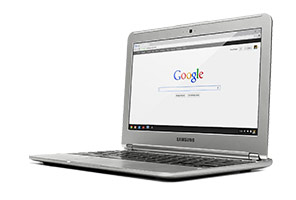
Chromebook Review
Pros:
Cost $250 roughly half the price of any other comparable laptop
Speed Fastest booting computer available. Literally seconds to start up.
Updates One of the problems with a Windows based system is you have to update or you will get behind and you have to pay for each update. Windows XP to Windows 7 to Windows 8 etc... With chromebooks there are automatic updates each day and you don't have to pay for costly operating system updates
Keyboard: In the debate of laptops vs iPads one of the biggest reasons to get a laptop is for the keyboard. For student use it is much more efficient and easier to use.
Virus Free: Because you cannot download potentially harmful software and because Google has added measures of protection the chromebooks are virus free. Currently they are the only virus free computers available, even cell phones can contract a virus.
Multi functional Device: Calculators Solves the problem of getting more calculators
Ease of use: Google Drive. One of the biggest pros of the chromebooks is being able to access Google Drive. Students can work on documents, presentations, etc... and be able to work in class or at home without worry of having a certain program i.e. Microsoft Word. It's free and set up the same as Word, you can access from anywhere with internet access. You can connect and collaborate easily with others. You can also create and not have to worry about saving it, or having it on a usb drive or cd.
Example of student collaborative efforts and what that has done for our class.
Battery Life: 6 hour battery life. Recharges quickly.
Filter: Wifi has automatic filter when you sign in.
Size: Light, thin, and small. Not bulky or heavy.
Camera: There is a camera that allows use for google hangouts. This is another great way for students to connect and collaborate. One great function of google hangouts is the ability to have up to 10 users at once. You can pull in a document, website, or video and be able to view it together and comment on it in real time. Another great feature with hangouts is that you can record your hangout. For me this is great with time zone issues and 7 class periods it is unreasonable and virtually impossible to connect with others depending on where they are from and their availability. Having the option to record and then show other classes is ideal. Really incredible opportunities for classes to connect worldwide.
Google Apps for Education:
Overall: For the cost it is easily the biggest bang for your buck. Great for students allows them to connect, collaborate, create, and critically think.
Cons: A point about the cons is that all of them can also be seen as pros for students use. For example not having a hard drive will prevent students downloading potentially harmful software. While there may be times you might use a cd/dvd these times are few and far between. Not being able to use Microsoft Word may take adjusting, but Google docs is free and very much the same and offers collaboration and ease of sharing, saving, and availibility.
Printer setup: Needs STS to set up printers on all computers, but would have to for any new devices anyhow.
No disk drive: Can't load movies, games, programs from a cd/dvd.
No hard drive: Use google drive to save, can't load other programs, pics and video need to be added to web because there is no hard drive
Microsoft: Can't use word, but for students Google docs is a much better option.
Programs: Can't download programs onto computer, all has to be web based, again this can be seen as a pro in some ways.
I think for a school setting the chromebook is an excellent option for teachers/students. The cost alone makes it an excellent choice. Add in the speed, ease of use, automatic updates, virus protection, and it's a top of the line device as long as you have wifi. You have the capability of using the chromebook offline. I didn't really have time to use that so I am not certain of it's effectiveness, but in a wired school this is a great option for students and teachers alike
Note: After speaking to students the vast majority prefer Google docs to Word because of it's collaboration, saving, and accessibility. I would add for me I like the ability for students to share work with me rather than having 180 copies of paper and so forth.
Sunday, April 28, 2013
My thoughts on the Teacher of the Year Award

Here is the story from the newspaper
Just want to take a minute and express my gratitude this morning. I am thankful for the many people that have guided, directed, taught, and helped me throughout my life. I would not be the person I am without everyone who has been there for me; family, friends, colleagues, teachers, students, neighbors, and all else who have in some way shaped my life. Thank you.
When I started I never imagined that I would spend the first eight years of my career working with at risk and even post risk students. Yet it became the most important and pivotal moment of my life. It was difficult, tough, and stressful. There were days I questioned myself and wondered if I was really making a difference and helping these students out. Yet there was something almost magical that happened along the way. Students that previously were failing all their classes were now not only passing but in many cases getting A's and B's. I realized the impact one could have when you followed the ever famous phrase "no one cares how much you know until they know how much you care." It has become the theme of my style. It is one of those truisms like the law of the harvest. "you get out of it what you put into it" While I have put in much I have received much more in return.
I was quoted in the article as saying I am humbled and excited at the same time. I truly am. I am proud of my profession and the wonderful people I work with and have worked with. It is great to work with such committed and caring people that are there to help others out. Too many times we hear the negatives about schools, teachers, and students. There is much more good being done than not. The teachers I know are committed to helping out and doing what they can to work with all of their students.
I would be remiss if I didn't mention the students themselves. I am inspired daily by them. I enjoy each of their personalities, even the tough ones. Every day, every class is different and unique. We learn and we have fun at the same time. In my book that's the best way to do it.
Finally, it was especially rewarding to receive this award with my wife and kids present. It was neat to see and feel their excitement. It will be a treasured family moment in which we all shared. Hopefully it will inspire them to be their best and to make the most of the opportunities and their lives.
Thank you all for your kindness and support.
Subscribe to:
Posts (Atom)